
I never loved Los Angeles.
In some ways, it was a place that should have been made for a person like me. I was born in California, but like Joan Didion, was also born to Northern Californian folk. I liked being outside and swimming. I was social and am social, though the amount of time it now takes me to recover from social interaction does make me think that I might be more introverted than expected. 16 years old and unhappy with my parents’ divorce, I did not want to go back to New York City, so when given the choice between Los Angeles and New York, I did lean towards LA. So many things were stacked against my love for it. I did not drive and I would not drive until living in New Mexico when I was 21. I had body issues; therefore, bikini culture was out of the question. I found pockets of pleasure though. I lived in an apartment at the base of Griffith Park and would hike up to the top almost every day. There was a Thai restaurant in walking distance that boasted big portions and the owner knew my partner by name. I went to car shows. I buzzed my hair short. I went to a drag show about the movie Showgirls (1995). I fell in love there. I got sunburns there. I ate In-N-Out there. I made friends that I would keep for the rest of my life and in the end, I still go back every few months, unable to resist the draw to said friends. I went to A Light in Dark Places at the Stella Adler Theatre: a short-play festival during September centered around suicide prevention. I realized I was bisexual after falling in love with one of my friends in high school. I lost my faith and found another I wasn’t expecting. In the end, I could never regret my time there. Something about Los Angeles is tattooed on my heart. Something about Los Angeles eludes me and I keep investigating why – something about the glamor that always just skimmed me. Something about happiness there that was just out of reach, yet in reach were long days and thrift stores, fresh produce, enigmatic people, inflated property prices, and vintage cars.
I stumbled across this quote by Eve Babitz,
“I did not become famous but I got near enough to smell the stench of success. It smelt like burnt cloth and rancid gardenias, and I realized that the truly awful thing about success is that it’s held up all those years as the thing that would make everything all right. And the only thing that makes things even slightly bearable is a friend who knows what you’re talking about.”
Somehow, I knew from this quote that Eve Babitz was authentic, a woman from Los Angeles who knew that fame wasn’t something worth having. Despite growing up in the petri dish of famous people and men who tried to make a muse of her she could see through it all.
This specific Didion quote hit hard after my 27th birthday:
“I think we are well advised to keep on nodding terms with the people we used to be, whether we find them attractive company or not. Otherwise, they turn up unannounced and surprise us, come hammering on the mind’s door at 4 a.m. of a bad night and demand to know who deserted them, who betrayed them, who is going to make amends.”
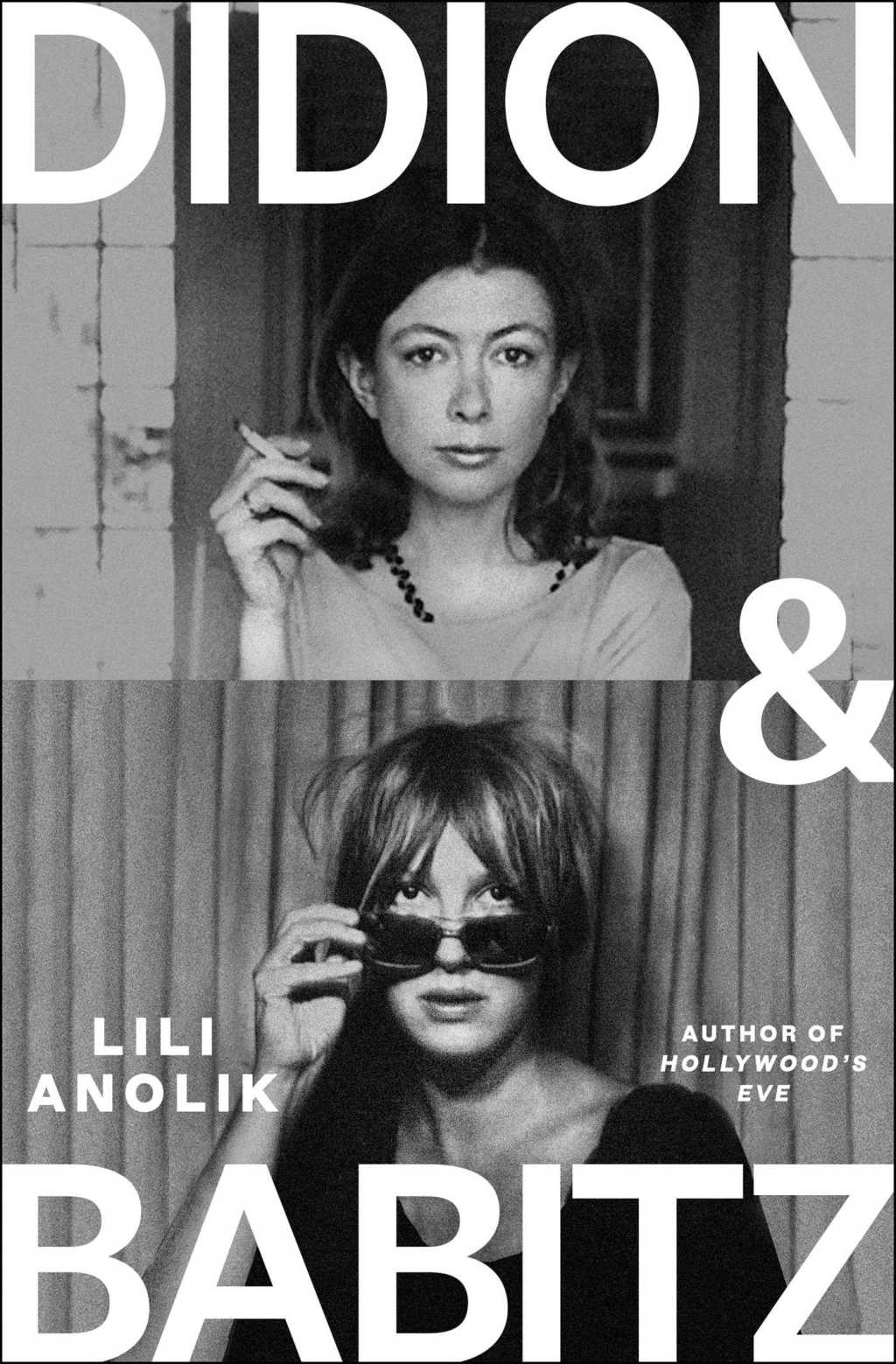
For decades women have been asking themselves, “Am I a Jackie or a Marilyn?” After this book you will be asking yourself, “Am I Didion or am I a Babitz?” The answer may surprise you. These two women are like Gemini twins, dictated by the images they presented to the world. They are shadow versions of one another. Joan: the masculine narrator in a frail woman’s body. Eve: the thwarted artist in the body of a bombshell. Both women were Californian, both women were artists, but only one reigned as the “voice of a generation.” This book outlines why – possibly why. The narrative timeline, like overlapping Los Angeles freeways, can be a bit disorienting, but the roadmap of these women’s milestones are excellent markers. Both stories have all the marks of a blockbuster flick. Mark them as they speed past you, like the highway markers they are: affairs, illness, marriage and the lack thereof, clear California skies, mirrors on walls and handhelds, serious men, long days, rockstars, money, fame, heartbreak, and ambition. With name dropping at an all-time high, do not get distracted by the 20th Century tastemakers who litter both women’s lives. Get an insight into themselves that only an acolyte could provide through painstaking scribe work.
The documentary, The Center will not Hold (2017), does not even come close to this portrayal of Didion in the landscape of the Golden State, in the same way that Babitz’s prose barely skims the surface of who she is. Apparently, Gregory Dunne, Didion’s husband, was not the love of her life? Apparently, there were rumors about the sexuality of her husband. These last two questions made me gasp aloud – the Didion-Dunne marriage, one of the great literary couples of the 20th century was one of arrangement by a past boyfriend of Didion’s? Did Joan really believe in sacrificing the pleasures of the body so much? It appears so, a close friend in the book would recount that while Didion was known for being a great cook, she herself would eat hardly any of it. Celebrities drift in and out of the book and seem to bounce between Didion and Babitz over and over. Despite being one of the bedfellows of Jim Morrison Babitz recounts how much of a dork she thought he was, and how much Didion seemed to worship rock stars with disdain. After all the film A Star is Born remade with Barbra Streisand, was penned by Didion and her husband and they were the ones who changed the main character from Movie Stars to Rock Stars. Two sides of the same coin of adoration. One who was the lover of rock stars and the other one who loved rock stars. Babitz also contends that it was Pamela, Morrison’s girlfriend, who was the truly cool and terrifying one. Neither one of them strikes me as a girl’s-girl, but each one was loyal to the women they picked. Oddly enough Didion was loyal to Babitz – she would suggest edits on pieces (that Babitz would ignore).
Both women learned how to align themselves with men to get what they want – if in vastly diverse ways. Both women tried to make a go of it in NYC before coming back to California – with their tails between their legs. Both women did more than was ever expected of them, Babitz becoming not only a woman of letters but art as well, and Didion becoming a war correspondent in her own right. Both women thought that feminism wasn’t truly something they needed. Both women pushed against the images of themselves, each wished to be a little more like the other. Babitz wanting to be more disciplined and Didion wishing to be more enthusiastic. In her documentary,Didion admits that her own daughter thought her cold and removed her. Both women were respected or tolerated parts of their worlds, Babitz the rock and roll world, and Didion the literary – both wished to be more in the others. I hope you can find a little of yourself in both, in the little and big ways. Investigate yourself- that was the life journey of both women. This book is perfect for any young person who wants to be in the creative field, girls trying to find their identity, washed up rock stars hoping to glimpse the immortality they embodied for just a moment and writers of any age. This book welcomes the LA acolytes, the bookish, the brainish, and the brawnish – the Californians at heart.
While womanhood often defies binary experiences, I think the question after reading Didion and Babitz is “Are you a Joan or an Eve?” Both were amazing writers and enigmatic women within their own rights. They were also magazine writers during their time. Reading the book gives you a sense that, rather than opposites, the pair of them were each two sides of the same aura – a shadowy pair of Gemini figures, forming something that defies dichotomy.
In honor of the book, Didion and Babitz by Lili Anolik, coming out in November 2024, I have created a quiz you might have found tucked away in one of the very same magazines these incredible women were writing for in the1970s.
So, plug in that lava lamp, stretch out over that yellow bedspread, and keep the landline nearby.
 ALEXANDRA AVILA